American Woodcock: A Comprehensive Overview
The American Woodcock, a unique bird, exhibits fascinating behaviors like a distinctive mating dance and foraging techniques, captivating observers with its springtime displays.
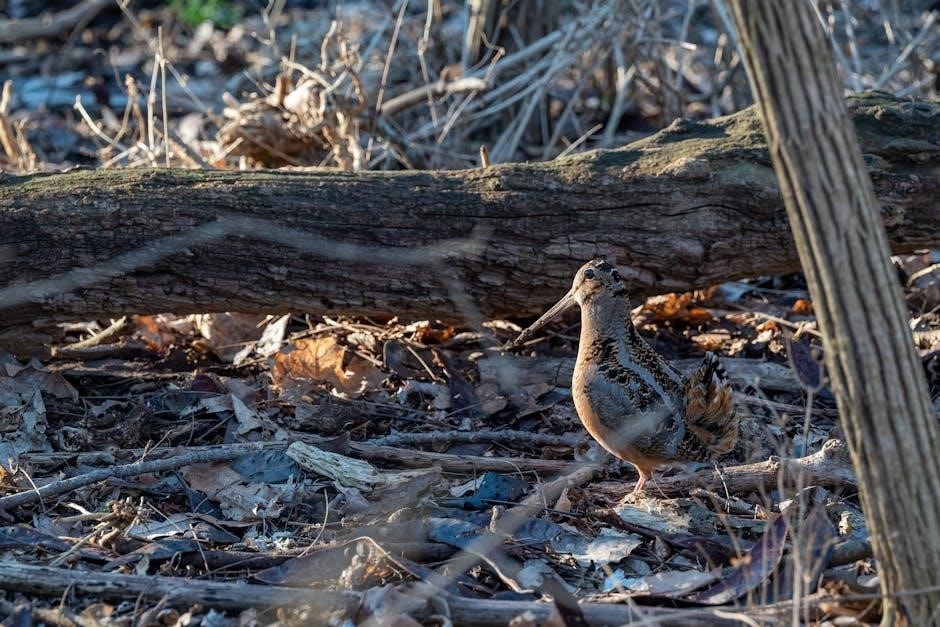
The American Woodcock (Scolopax minor) is a captivating, yet often elusive, bird native to North America, standing out as the sole representative of its family on the continent. Frequently observed in eastern regions, this shorebird surprisingly thrives in upland habitats, diverging from typical shorebird preferences. Known for its secretive nature, it’s rarely spotted during daylight hours, preferring the cover of forests, thickets, and brushy swamps.
Its increasing popularity stems from viral videos showcasing its elaborate courtship displays – a mesmerizing “dancing” ritual performed at dusk and dawn during the spring migration. This unique behavior, coupled with its probing foraging style for earthworms, makes the woodcock a subject of fascination for birdwatchers and researchers alike. Despite its common presence, its population has experienced a concerning decline since the 1960s, prompting conservation efforts.
Taxonomy and Classification
The American Woodcock is scientifically classified as Scolopax minor, placing it within the family Scolopacidae – a family commonly known as sandpipers and shorebirds. However, unlike many of its relatives, the woodcock exhibits a preference for inland, upland habitats rather than coastal shorelines. It’s the only woodcock species native to North America, with seven other species found across Europe and Asia, highlighting its unique evolutionary path.
Its taxonomic position reflects shared characteristics with sandpipers, such as its long bill and legs. Yet, its behavioral adaptations, particularly its foraging techniques and elaborate courtship displays, distinguish it significantly. The classification acknowledges its lineage while recognizing its specialized niche. Understanding its taxonomic placement is crucial for conservation efforts and comparative studies within the broader Scolopacidae family.
Physical Characteristics & Identification
The American Woodcock is a relatively small shorebird, typically measuring around 11-12 inches in length. Its plumage is a mottled brown, providing excellent camouflage within its forest habitat. A key identifying feature is its short legs and long, slender bill – perfectly adapted for probing soil. The eyes are positioned high and far back on the head, granting a nearly 360-degree field of vision, crucial for detecting predators.
These birds are generally observed on the ground, rarely seen in flight except during their captivating courtship displays. They lack the bright coloration of many other bird species, relying instead on subtle patterns for concealment. Their overall appearance is somewhat stout and compact, contributing to their distinctive, low-to-the-ground posture. Recognizing these features aids in accurate identification in the field.
Distinguishing Features: Woodcock vs. Wilson’s Snipe
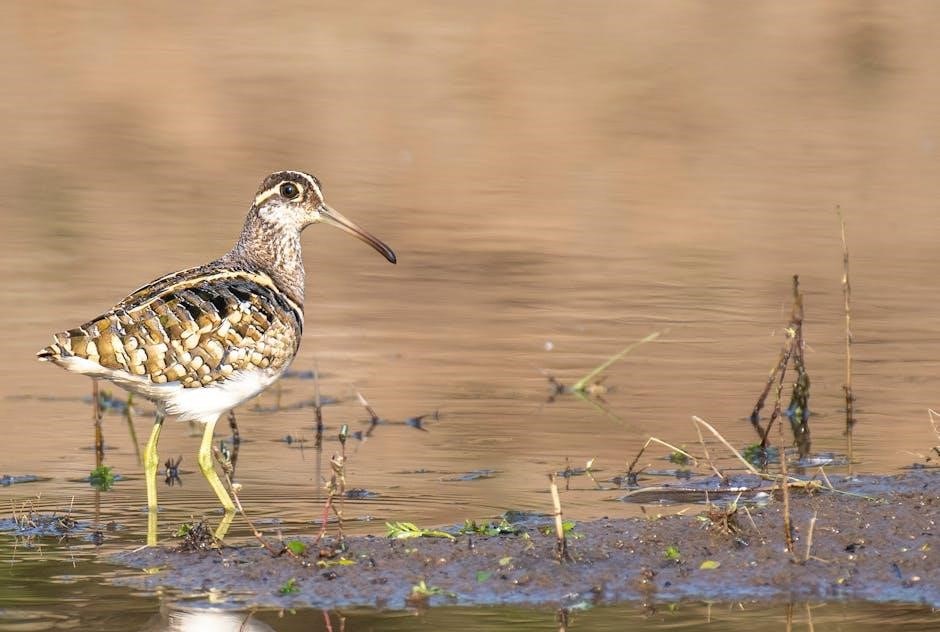
Distinguishing the American Woodcock from the similar Wilson’s Snipe can be challenging, but key differences exist. Woodcocks are generally less dark and patterned overall than Wilson’s Snipe. Snipe exhibit more prominent dark stripes on their back and crown, creating a bolder appearance. The Woodcock’s bill is longer and more slender, specifically adapted for deep probing in soil, while the Snipe’s bill is shorter and straighter.
Behaviorally, Woodcocks are often found in more wooded, upland habitats, whereas Snipe prefer wetter, more open areas. Observing the bird’s posture is also helpful; Woodcocks stand more upright, while Snipe tend to be more horizontal. Careful attention to these subtle distinctions will aid in accurate species identification in the field, avoiding potential misidentification.
Habitat and Distribution
The American Woodcock’s distribution is primarily throughout eastern North America, though it’s often a secretive bird, rarely seen during daylight hours. It favors a diverse landscape, utilizing a mix of forest and open fields, spending days within forested areas and venturing into open spaces at night. Preferred habitats include wet thickets, moist woods, and brushy swamps, areas providing both cover and foraging opportunities.
This species isn’t strictly limited to upland settings, despite its classification with shorebirds. They demonstrate adaptability, thriving in environments offering suitable soil conditions for earthworm foraging. Their range extends from Newfoundland and Labrador south to Florida and west to eastern Texas and Oklahoma, showcasing a broad, yet fragmented, distribution across the continent.
Preferred Environments: Forests, Fields, and Wetlands
American Woodcock demonstrate a preference for early successional forests – areas with young trees and a developing understory. These environments provide crucial cover and nesting sites. They also utilize fields and open areas, particularly those with moist soil, for foraging. Wetlands, including brushy swamps and thickets, are vital components of their habitat, offering both food resources and protection.
A key element is the presence of both forest and open areas in close proximity. Woodcock often spend daylight hours in forests and commute to fields or wetlands at dusk to feed. The ideal habitat features a mosaic of these environments, allowing for a balance between safety and foraging efficiency. Moist soil conditions are paramount, supporting the abundant earthworm populations that form a cornerstone of their diet.
Migration Patterns & Range
American Woodcock are considered short-distance migrants, unlike many other shorebirds. Their breeding range extends across eastern North America, from southeastern Alaska to Newfoundland and south to parts of the southeastern United States. During fall migration, birds from the northernmost parts of their range move southward, primarily to the Atlantic coast and Gulf states.
This migration isn’t a long, continuous flight to warmer climates. Instead, it’s a more gradual shift, with birds dispersing over a broad area. They don’t typically undertake extensive oceanic crossings. The range is influenced by factors like forest availability and winter food resources. While generally remaining within North America, the specific destinations vary annually based on environmental conditions and food availability.
Diet and Foraging Behavior
The American Woodcock’s diet is heavily reliant on earthworms, constituting nearly 80% of their food source. However, they are not exclusively earthworm eaters. Their diet is supplemented with various invertebrates, including ants, flies, beetles, crickets, caterpillars, spiders, and grasshoppers, particularly during breeding season when energy demands are higher.
Woodcock employ a unique foraging technique: probing the soil with their long, sensitive bills. This allows them to detect earthworms beneath the surface. Their flexible bill tip aids in capturing prey. They often forage at dusk, commuting to feeding areas separate from their daytime roosting sites. This specialized foraging behavior is crucial to their survival and highlights their adaptation to a specific ecological niche.
The Importance of Earthworms
Earthworms are absolutely critical to the American Woodcock’s survival, forming the cornerstone of their diet – comprising approximately 80% of their food intake. This dependence highlights the woodcock’s strong link to soil health and the invertebrate communities within it. The availability of earthworms directly impacts breeding success and overall population health.
Woodcocks actively seek out soils rich in earthworms, often favoring moist, loamy habitats where these invertebrates thrive. Their specialized bill morphology and foraging technique are perfectly adapted for extracting earthworms from the soil. Fluctuations in earthworm populations, due to factors like pesticide use or habitat degradation, can therefore have significant negative consequences for woodcock populations, emphasizing the need for conservation efforts focused on soil health.
Other Dietary Components
While earthworms dominate the American Woodcock’s diet, they are not exclusively reliant on these invertebrates. A diverse range of other insects and invertebrates contribute to their nutritional needs, particularly during breeding season and when earthworm availability is limited.
These supplementary food sources include ants, various types of flies, beetles, crickets, caterpillars, spiders, and grasshoppers. These insects provide essential proteins and fats, supporting energy demands for flight, courtship displays, and egg production. The availability of these alternative prey items can buffer woodcocks against fluctuations in earthworm populations, contributing to their resilience. Woodcocks demonstrate adaptability in their foraging, exploiting seasonally abundant insect life to supplement their primary earthworm-based diet, ensuring a balanced nutritional intake.
Unique Foraging Techniques: Bill Probing
The American Woodcock employs a highly specialized foraging technique – probing the soil with its long, sensitive bill. This remarkable adaptation allows them to detect earthworms and other invertebrates hidden beneath the surface. Unlike many shorebirds that feed visually, woodcocks rely on tactile sensation, moving their bill tip back and forth within the soil.
Their flexible bill tip, equipped with sensory receptors, detects the movement of prey. They repeatedly plunge their bill into the ground, often creating small, visible holes. This probing behavior is incredibly efficient, enabling them to locate and extract earthworms even in dense vegetation or leaf litter. The woodcock’s foraging style is a testament to its evolutionary specialization for exploiting a hidden food source, showcasing a unique ecological niche.
Behavioral Characteristics
The American Woodcock is generally a solitary and secretive bird, rarely seen in open areas during the day. They spend most of their time on the ground, expertly camouflaged within forest undergrowth and brushy habitats. However, their behavior dramatically shifts during the spring breeding season, becoming notably more conspicuous.
Perhaps the most iconic aspect of woodcock behavior is their elaborate courtship display, often described as a “dance.” This performance, conducted at dusk and dawn, involves a series of stomping, rocking motions, and vocalizations by the male to attract a mate. They are always on the ground, except during this well-known display. This unique behavior, combined with their foraging habits, defines their distinctive ecological role.

The Elaborate Courtship Display (Dancing)
The male American Woodcock’s courtship display is a truly remarkable spectacle, performed from dusk to dawn during the spring breeding season. This “dance” involves a series of distinctive movements, beginning with a rapid, mechanical-sounding vocalization; He then begins a deliberate stomping, creating a soft drumming sound as he compresses the forest floor.
Simultaneously, the male rocks and bobs his body, displaying his chestnut and buff underwings in a mesmerizing pattern. He may repeat this performance multiple times, often moving to different locations within a display ground. This elaborate ritual serves to attract the attention of females, showcasing his fitness and genetic quality. The viral videos highlight this unique behavior, drawing attention to this fascinating bird.
Vocalization and Communication
American Woodcock communication relies heavily on a variety of vocalizations, beyond the well-known sounds of their courtship display. The males produce a distinct “seet” call, often described as a buzzy or nasal sound, used for general communication and maintaining contact. During the dancing display, they emit a rapid, mechanical “chuk-chuk-chuk” sound, accompanying their stomping and wing displays.
Females also vocalize, though their calls are typically softer and less frequent. These calls likely play a role in pair bonding and coordinating breeding activities. While primarily vocal, woodcocks also utilize visual signals, particularly during the courtship display, with the flashing of their underwings serving as a key component of communication. These sounds and displays are crucial for successful reproduction.
Population Trends and Conservation Status
American Woodcock populations have experienced a concerning decline since the 1960s, averaging slightly more than 1% annually. This downward trend raises significant conservation concerns, prompting ongoing monitoring and research efforts. Habitat loss and fragmentation, particularly the loss of young forests and early successional habitats, are considered primary drivers of this decline.
Changes in agricultural practices and increased urbanization also contribute to habitat degradation. While not currently listed as threatened or endangered, the woodcock is a species of high conservation concern. Conservation strategies focus on maintaining and restoring suitable habitat, promoting sustainable forestry practices, and monitoring population trends to assess the effectiveness of these efforts. Continued vigilance is crucial to ensure the long-term survival of this unique bird.
Historical Population Decline
The American Woodcock has faced a notable population decrease since the 1960s, with an average annual decline exceeding 1%. This reduction isn’t a recent phenomenon; it’s a long-term trend linked to several interconnected factors impacting the bird’s habitat and survival. Historically, widespread forest clearing created early successional habitats favored by woodcock.
However, subsequent forest regrowth, coupled with shifts in agricultural practices and increased urbanization, have diminished these crucial areas. The loss of young forests, vital for nesting and foraging, is a primary driver. Changes in land use have also fragmented remaining habitats, isolating populations and reducing genetic diversity. Understanding these historical changes is essential for developing effective conservation strategies aimed at reversing this decline and securing the woodcock’s future.
Common Names and Local Variations
Beyond the standard “American Woodcock,” this bird boasts a rich tapestry of regional nicknames, reflecting its long history alongside human communities. Perhaps the most widespread is “timberdoodle,” a moniker of uncertain origin but deeply ingrained in hunting and folklore. Other charming variations include “Labrador twister,” “night partridge,” and “bog sucker,” each hinting at the bird’s preferred habitats and behaviors.
These local names demonstrate a close relationship between people and the woodcock, passed down through generations. The diversity of these terms highlights the bird’s presence across different regions and the unique observations of local populations. Recognizing these alternative names provides insight into the cultural significance of the American Woodcock and its enduring presence in North American landscapes.
Woodcock and Human Interaction
Historically, the American Woodcock has been a game bird, sought after by hunters for sport and sustenance; This interaction, while providing recreational opportunities, has also contributed to population declines, particularly due to habitat loss and fragmentation. Modern game management practices aim to balance hunting with conservation efforts, ensuring sustainable populations for future generations.
Beyond hunting, the woodcock’s captivating courtship displays have garnered increasing public interest, fueled by viral videos showcasing its unique “dancing” behavior. This newfound attention fosters appreciation for the species and encourages habitat preservation. Understanding the interplay between human activities and woodcock populations is crucial for implementing effective conservation strategies and maintaining a healthy ecosystem.
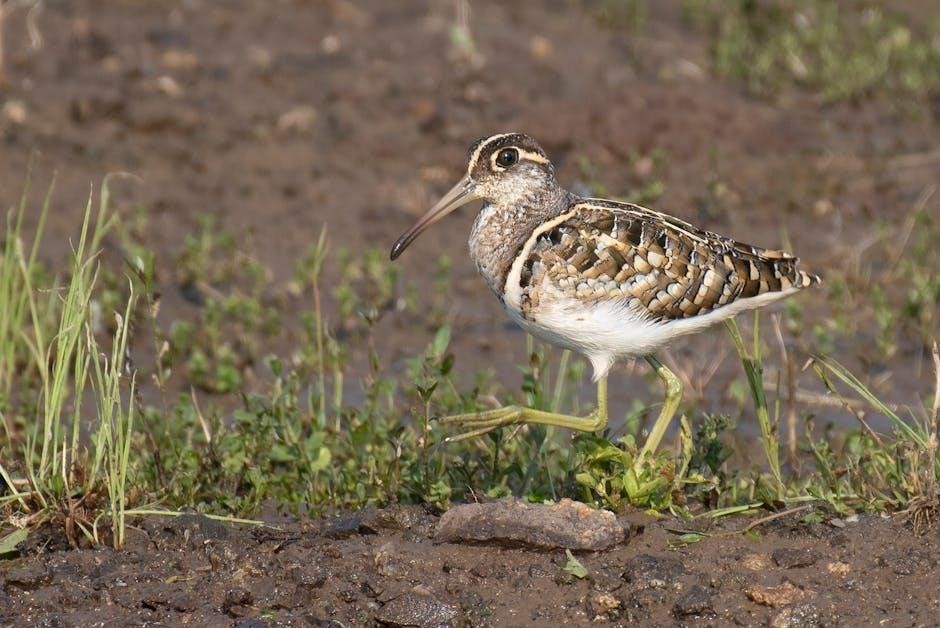
Cultural Significance & Nicknames (Timberdoodle)
The American Woodcock boasts a rich tapestry of common names and local nicknames, reflecting its long-standing relationship with people. Perhaps the most well-known is “Timberdoodle,” a moniker with uncertain origins, possibly linked to the bird’s preference for timbered forests or its erratic flight pattern. Other regional names include “Labrador twister,” “night partridge,” and “bog sucker,” each hinting at specific behaviors or habitats.
These nicknames demonstrate a deep cultural connection, passed down through generations of hunters and naturalists. The woodcock frequently appears in folklore and regional stories, solidifying its place in the cultural landscape. This enduring presence highlights the bird’s unique character and its ability to capture the imagination, fostering a sense of stewardship among those who share its range.